Loading...

Company Logo

Legal Insights and Expert Guidance

Stay informed with authoritative legal analysis, practical guidance, and the latest updates in corporate law, compliance, and governance from trusted professionals.

Latest Articles

Are You an Independent Contractor or an Employee? Why It Matters Legally

Jun 14, 2025

Employment Law

Are You an Independent Contractor or an Employee? Why It Matters Legally

I'm seeing more and more people embrace the world of independent contracting and freelancing. It offers flexibility, autonomy, and the chance to be your own boss. But while the appeal is strong, it's crucial to understand the legal distinction between an independent contractor and an employee. Getting this wrong can lead to significant legal headaches for both the individual and the business they're working with.

This distinction isn't just a label; it carries serious implications for taxes, benefits, liability, and worker protections.

The Core Difference: Control

The primary factor courts and government agencies consider when determining status is the degree of control a company has over how, when, and where the work is performed.

Think of it this way:

  • Employees typically receive detailed instructions, work set hours, use company equipment, and are part of the company's regular business operations. The company controls how the job gets done.
  • Independent Contractors usually have more autonomy. They often set their own hours, use their own tools, control the methods they use to complete the work, and can work for multiple clients. The company generally controls what result they want, but not how it's achieved.

Why This Distinction Matters

Let's break down the practical impacts:

  • Taxes:
    • Employees have income, Social Security, and Medicare taxes withheld by their employer, who also pays a share of these taxes.
    • Independent Contractors are responsible for paying their own self-employment taxes (both the employee and employer portions of Social Security and Medicare) and estimated income taxes.
  • Benefits:
    • Employees often receive benefits like health insurance, paid time off, retirement plans, and workers' compensation.
    • Independent Contractors generally do not receive these benefits from their clients. They're responsible for arranging their own.
  • Worker Protections:
    • Employees are protected by laws concerning minimum wage, overtime, discrimination, and wrongful termination.
    • Independent Contractors typically aren't covered by these same protections.
  • Liability:
    • For employees, the employer is often liable for their actions performed within the scope of employment.
    • For independent contractors, they are generally responsible for their own liabilities, and businesses hiring them are often less liable for their actions.

What Happens If You're Misclassified?

Misclassification is a big deal. If a business wrongly classifies an employee as an independent contractor, it can face significant penalties from tax authorities for unpaid payroll taxes, fines, and back wages. For the individual, it can mean missing out on crucial benefits and protections.

My Advice: Don't Guess

Whether you're thinking of hiring someone as an independent contractor or you're planning to work as one, it's vital to get the classification right from the start. A clear, well-drafted contract that accurately reflects the working relationship is your best defense. Don't rely on assumptions or verbal agreements.

If you're unsure about your status or the status of someone you're hiring, it's always wise to get legal advice. Clarifying this upfront can save you a lot of trouble down the road.


Protecting Your Big Idea: Understanding Intellectual Property Basics

Protecting Your Big Idea: Understanding Intellectual Property Basics

I often meet passionate individuals with groundbreaking ideas – a unique product design, a catchy business name, a brilliant piece of software, or an original artistic creation. They're excited to bring their vision to life, but sometimes overlook a critical step: protecting their intellectual property (IP).

Your intellectual property is essentially the product of your mind – your creations, inventions, and brand identifiers. It's often your most valuable asset, even if it's not physical. Failing to protect it can leave you vulnerable to competitors copying your work, misusing your brand, or outright stealing your innovations.

So, what are the main types of intellectual property you should be aware of?

Key Types of Intellectual Property

  1. Copyrights: This protects original works of authorship, such as books, music, art, software code, photographs, and architectural designs. Copyright protection generally arises automatically once the work is created in a tangible form, but registration with the relevant government office offers significant additional legal benefits, including the ability to sue for infringement and recover statutory damages.
  2. Trademarks: These protect brand elements that distinguish your goods or services from others. Think company names, logos, slogans, and even unique product packaging. A registered trademark gives you exclusive rights to use that mark for your specific goods or services and helps prevent others from using similar marks that could confuse consumers.
  3. Patents: These protect inventions. A patent grants the inventor exclusive rights to make, use, and sell their invention for a set period (usually 20 years from the filing date, for utility patents). There are different types:
    • Utility Patents: For new and useful processes, machines, articles of manufacture, or compositions of matter, or any new and useful improvements thereof.
    • Design Patents: For new, original, and ornamental designs for articles of manufacture.
    • Plant Patents: For new and distinct asexually reproduced plants. Patents are often the most complex and expensive IP to secure, requiring detailed applications and strict criteria for novelty and non-obviousness.
  4. Trade Secrets: This protects confidential information that gives a business a competitive edge. Examples include unique recipes (like the Coca-Cola formula), customer lists, manufacturing processes, or marketing strategies. The key to trade secret protection is maintaining its secrecy through non-disclosure agreements (NDAs), strict internal security, and limited access. If the secret is widely known or easily discoverable, it loses its protection.

Why Does This Matter to You?

For solo entrepreneurs, creatives, and small businesses, understanding these basics isn't just legal jargon – it's fundamental to building and safeguarding your business.

  • Protect Your Brand: Registering your business name and logo as trademarks can prevent others from cashing in on your reputation.
  • Monetize Your Creations: Copyrights allow you to license your creative works, ensuring you get paid for their use.
  • Secure Your Innovations: Patents can give you a monopoly on your invention, allowing you to dominate a market or license your technology.
  • Maintain Your Edge: Trade secrets keep your competitive advantages under wraps.

Don't let your "big idea" become someone else's profit. Taking proactive steps to identify and protect your intellectual property is an essential investment in your future. If you have questions about what IP you might have or how to protect it, let's talk.

Understanding Contracts: Why That Handshake Might Not Be Enough

Jun 14, 2025

Legal Basics

Understanding Contracts: Why That Handshake Might Not Be Enough

As a solo lawyer, I often see clients who've run into trouble because they relied on a verbal agreement or a casual exchange. While a handshake can build trust, when it comes to business or significant agreements, it's rarely enough. That's why understanding the basics of a contract is crucial.

Think of a contract as a legal safety net. It's a legally binding agreement between two or more parties that creates mutual obligations enforceable by law. But what makes an agreement a contract?

The Essential Elements of a Valid Contract

For an agreement to be considered a legally enforceable contract, it generally needs these key elements:

  1. Offer: One party proposes specific terms to another. "I will sell you my car for $5,000."
  2. Acceptance: The other party agrees to those specific terms without significant changes. "Yes, I will buy your car for $5,000."
  3. Consideration: This is often misunderstood. It's not just money; it's something of value exchanged between the parties. It could be goods, services, money, or even a promise to do (or not do) something. Both sides must give up something for the agreement to be valid. In our car example, the car is the consideration from one side, and the $5,000 is the consideration from the other.
  4. Mutuality/Meeting of the Minds: Both parties must understand and agree to the same essential terms. They must intend to be bound by the agreement.
  5. Legality: The purpose of the contract must be legal. You can't have a contract to do something illegal.
  6. Capacity: All parties must be legally competent to enter into an agreement (e.g., of legal age, not under severe duress, and of sound mind).

Why Put It In Writing?

While some verbal agreements can be legally binding, proving their terms in court is incredibly difficult. Memories fade, interpretations differ, and it quickly becomes a "he said, she said" situation.

Putting your agreement in writing provides:

  • Clarity: It forces both parties to clearly define terms, expectations, and responsibilities.
  • Proof: A written document serves as undeniable evidence of what was agreed upon.
  • Enforceability: If disputes arise, a written contract makes it far easier to enforce the terms in court.

Don't Skip the Details

Even in a simple agreement, small details matter. What's the timeline? What are the payment terms? What happens if someone doesn't fulfill their part? These are the kinds of questions a well-drafted contract answers, preventing future headaches.

If you're entering into any significant agreement, whether it's for your small business, a freelance project, or a personal transaction, taking the time to consult with a lawyer to draft or review a contract is an investment, not an expense. It can save you significant time, money, and stress down the line.

Legal Advice

View All
Do I Really Need a Will? (Spoiler: Probably!)

Jun 14, 2025

Legal Advice

Do I Really Need a Will? (Spoiler: Probably!)

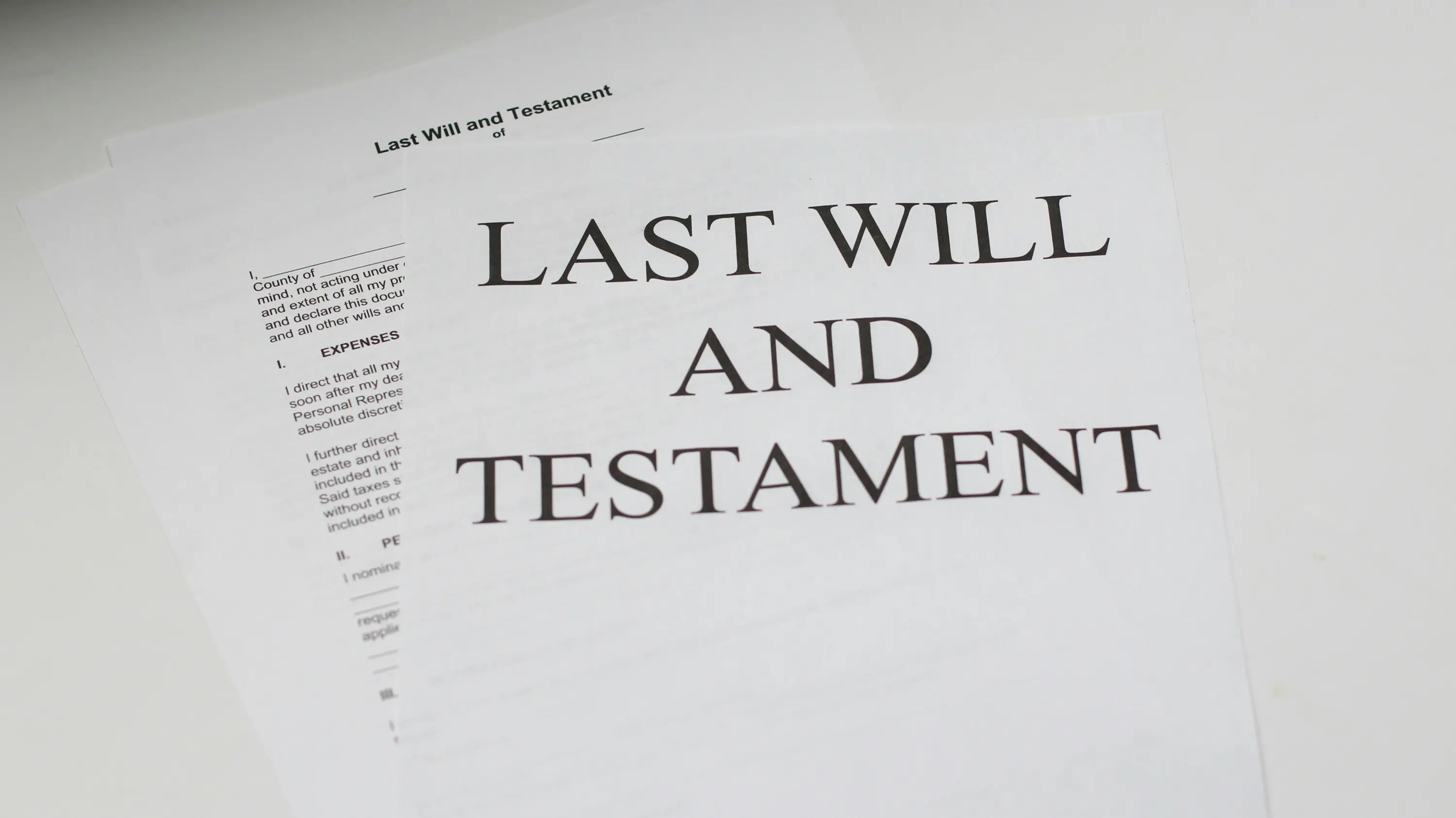
As a solo practitioner, I often get asked about wills. Sometimes it's from someone who's just had a new baby, sometimes from someone staring down retirement, and sometimes, frankly, from someone who just got around to thinking about it. The question is usually: "Do I really need a will?"

My answer? Almost always, yes.

It's easy to put off. We're busy, it feels a bit morbid, and honestly, who wants to think about that stuff? But here’s the thing: having a will isn't about expecting the worst; it's about planning for the future and providing clarity and ease for your loved ones.

What happens if you don't have a will?

Without a will, your assets are distributed according to your state's "intestacy laws." While these laws aim to be fair, they might not align with your wishes. For example:

  • Who gets what? Your property might go to relatives you wouldn't have chosen, or in proportions you wouldn't have preferred.
  • Guardianship for your children: This is a big one. If you have minor children, a will is where you designate who you want to raise them if something happens to you and the other parent. Without a will, the court will decide, and it might not be the person you would have chosen.
  • Probate can be more complex and costly: While probate (the legal process of proving a will) often occurs whether you have a will or not, an organized and clear will can significantly streamline the process, potentially saving your loved ones time, stress, and legal fees.
  • No specific bequests: Want to leave a particular family heirloom to a specific person? Or make a donation to a charity? Without a will, those specific wishes are unlikely to be honored.

It's simpler than you think.

Many people imagine the process of creating a will to be complicated, expensive, and time-consuming. While every situation is unique, for most individuals, a basic will is surprisingly straightforward to put together. It involves outlining your assets, deciding who you want to inherit them, and appointing an executor (the person who will manage your estate).

My Two Cents:

Think of a will as a roadmap for your family during a difficult time. It's a gift of clarity and peace of mind. As your local independent lawyer, I can guide you through the process, answer your questions, and help you create a document that truly reflects your wishes. Don't leave your legacy to chance – let's talk about getting your affairs in order.

Legal Basics

View All
Understanding Contracts: Why That Handshake Might Not Be Enough

Jun 14, 2025

Legal Basics

Understanding Contracts: Why That Handshake Might Not Be Enough

As a solo lawyer, I often see clients who've run into trouble because they relied on a verbal agreement or a casual exchange. While a handshake can build trust, when it comes to business or significant agreements, it's rarely enough. That's why understanding the basics of a contract is crucial.

Think of a contract as a legal safety net. It's a legally binding agreement between two or more parties that creates mutual obligations enforceable by law. But what makes an agreement a contract?

The Essential Elements of a Valid Contract

For an agreement to be considered a legally enforceable contract, it generally needs these key elements:

  1. Offer: One party proposes specific terms to another. "I will sell you my car for $5,000."
  2. Acceptance: The other party agrees to those specific terms without significant changes. "Yes, I will buy your car for $5,000."
  3. Consideration: This is often misunderstood. It's not just money; it's something of value exchanged between the parties. It could be goods, services, money, or even a promise to do (or not do) something. Both sides must give up something for the agreement to be valid. In our car example, the car is the consideration from one side, and the $5,000 is the consideration from the other.
  4. Mutuality/Meeting of the Minds: Both parties must understand and agree to the same essential terms. They must intend to be bound by the agreement.
  5. Legality: The purpose of the contract must be legal. You can't have a contract to do something illegal.
  6. Capacity: All parties must be legally competent to enter into an agreement (e.g., of legal age, not under severe duress, and of sound mind).

Why Put It In Writing?

While some verbal agreements can be legally binding, proving their terms in court is incredibly difficult. Memories fade, interpretations differ, and it quickly becomes a "he said, she said" situation.

Putting your agreement in writing provides:

  • Clarity: It forces both parties to clearly define terms, expectations, and responsibilities.
  • Proof: A written document serves as undeniable evidence of what was agreed upon.
  • Enforceability: If disputes arise, a written contract makes it far easier to enforce the terms in court.

Don't Skip the Details

Even in a simple agreement, small details matter. What's the timeline? What are the payment terms? What happens if someone doesn't fulfill their part? These are the kinds of questions a well-drafted contract answers, preventing future headaches.

If you're entering into any significant agreement, whether it's for your small business, a freelance project, or a personal transaction, taking the time to consult with a lawyer to draft or review a contract is an investment, not an expense. It can save you significant time, money, and stress down the line.

Intellectual Property Law

View All
Protecting Your Big Idea: Understanding Intellectual Property Basics

Jun 14, 2025

Intellectual Property Law

Protecting Your Big Idea: Understanding Intellectual Property Basics

I often meet passionate individuals with groundbreaking ideas – a unique product design, a catchy business name, a brilliant piece of software, or an original artistic creation. They're excited to bring their vision to life, but sometimes overlook a critical step: protecting their intellectual property (IP).

Your intellectual property is essentially the product of your mind – your creations, inventions, and brand identifiers. It's often your most valuable asset, even if it's not physical. Failing to protect it can leave you vulnerable to competitors copying your work, misusing your brand, or outright stealing your innovations.

So, what are the main types of intellectual property you should be aware of?

Key Types of Intellectual Property

  1. Copyrights: This protects original works of authorship, such as books, music, art, software code, photographs, and architectural designs. Copyright protection generally arises automatically once the work is created in a tangible form, but registration with the relevant government office offers significant additional legal benefits, including the ability to sue for infringement and recover statutory damages.
  2. Trademarks: These protect brand elements that distinguish your goods or services from others. Think company names, logos, slogans, and even unique product packaging. A registered trademark gives you exclusive rights to use that mark for your specific goods or services and helps prevent others from using similar marks that could confuse consumers.
  3. Patents: These protect inventions. A patent grants the inventor exclusive rights to make, use, and sell their invention for a set period (usually 20 years from the filing date, for utility patents). There are different types:
    • Utility Patents: For new and useful processes, machines, articles of manufacture, or compositions of matter, or any new and useful improvements thereof.
    • Design Patents: For new, original, and ornamental designs for articles of manufacture.
    • Plant Patents: For new and distinct asexually reproduced plants. Patents are often the most complex and expensive IP to secure, requiring detailed applications and strict criteria for novelty and non-obviousness.
  4. Trade Secrets: This protects confidential information that gives a business a competitive edge. Examples include unique recipes (like the Coca-Cola formula), customer lists, manufacturing processes, or marketing strategies. The key to trade secret protection is maintaining its secrecy through non-disclosure agreements (NDAs), strict internal security, and limited access. If the secret is widely known or easily discoverable, it loses its protection.

Why Does This Matter to You?

For solo entrepreneurs, creatives, and small businesses, understanding these basics isn't just legal jargon – it's fundamental to building and safeguarding your business.

  • Protect Your Brand: Registering your business name and logo as trademarks can prevent others from cashing in on your reputation.
  • Monetize Your Creations: Copyrights allow you to license your creative works, ensuring you get paid for their use.
  • Secure Your Innovations: Patents can give you a monopoly on your invention, allowing you to dominate a market or license your technology.
  • Maintain Your Edge: Trade secrets keep your competitive advantages under wraps.

Don't let your "big idea" become someone else's profit. Taking proactive steps to identify and protect your intellectual property is an essential investment in your future. If you have questions about what IP you might have or how to protect it, let's talk.

Employment Law

View All
Are You an Independent Contractor or an Employee? Why It Matters Legally

Jun 14, 2025

Employment Law

Are You an Independent Contractor or an Employee? Why It Matters Legally

I'm seeing more and more people embrace the world of independent contracting and freelancing. It offers flexibility, autonomy, and the chance to be your own boss. But while the appeal is strong, it's crucial to understand the legal distinction between an independent contractor and an employee. Getting this wrong can lead to significant legal headaches for both the individual and the business they're working with.

This distinction isn't just a label; it carries serious implications for taxes, benefits, liability, and worker protections.

The Core Difference: Control

The primary factor courts and government agencies consider when determining status is the degree of control a company has over how, when, and where the work is performed.

Think of it this way:

  • Employees typically receive detailed instructions, work set hours, use company equipment, and are part of the company's regular business operations. The company controls how the job gets done.
  • Independent Contractors usually have more autonomy. They often set their own hours, use their own tools, control the methods they use to complete the work, and can work for multiple clients. The company generally controls what result they want, but not how it's achieved.

Why This Distinction Matters

Let's break down the practical impacts:

  • Taxes:
    • Employees have income, Social Security, and Medicare taxes withheld by their employer, who also pays a share of these taxes.
    • Independent Contractors are responsible for paying their own self-employment taxes (both the employee and employer portions of Social Security and Medicare) and estimated income taxes.
  • Benefits:
    • Employees often receive benefits like health insurance, paid time off, retirement plans, and workers' compensation.
    • Independent Contractors generally do not receive these benefits from their clients. They're responsible for arranging their own.
  • Worker Protections:
    • Employees are protected by laws concerning minimum wage, overtime, discrimination, and wrongful termination.
    • Independent Contractors typically aren't covered by these same protections.
  • Liability:
    • For employees, the employer is often liable for their actions performed within the scope of employment.
    • For independent contractors, they are generally responsible for their own liabilities, and businesses hiring them are often less liable for their actions.

What Happens If You're Misclassified?

Misclassification is a big deal. If a business wrongly classifies an employee as an independent contractor, it can face significant penalties from tax authorities for unpaid payroll taxes, fines, and back wages. For the individual, it can mean missing out on crucial benefits and protections.

My Advice: Don't Guess

Whether you're thinking of hiring someone as an independent contractor or you're planning to work as one, it's vital to get the classification right from the start. A clear, well-drafted contract that accurately reflects the working relationship is your best defense. Don't rely on assumptions or verbal agreements.

If you're unsure about your status or the status of someone you're hiring, it's always wise to get legal advice. Clarifying this upfront can save you a lot of trouble down the road.